10 Most Valuable Hot Wheels Cars Every Collector Dreams Of Owning

1969 Pink Rear-Loader Beach Bomb
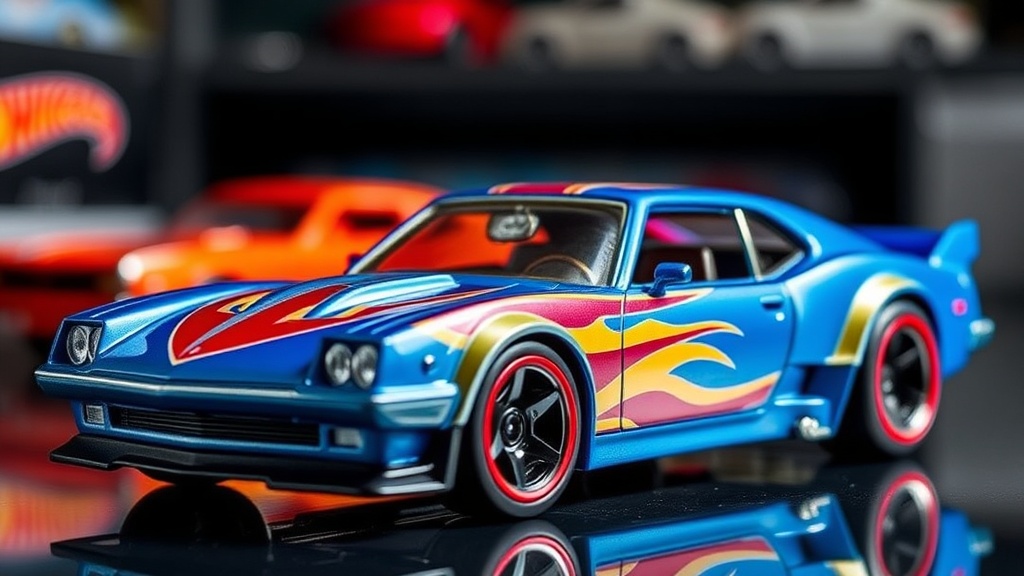
1968 Custom Camaro with White Interior
1970 Red Baron with White Interior
1969 Volkswagen Beach Bomb in Spectraflame Colors
1971 Olds 442 in Purple with White Interior
Some Hot Wheels cars sell for more than a used Honda Civic. This guide breaks down the ten most valuable castings in the hobby — the ones that make collectors stop scrolling and check their bank balance. Whether you're hunting flea market bins or tracking eBay auctions at 2 AM, knowing what to look for could turn a $2 thrift find into a four-figure payday.
What Makes a Hot Wheels Car Valuable?
The answer isn't nostalgia alone. Condition reigns supreme — Mint On Card (MOC) examples command premiums that loose cars can't touch. Errors matter too: misprints, mismatched wheels, and factory mistakes create instant rarities. Production numbers determine baseline scarcity, and original packaging from specific years (1968–1972 Redlines especially) adds exponential value.
Here's the thing — the market has shifted dramatically. Five years ago, everyone chased Treasure Hunts. Today, the real money sits in early Redlines, certain convention cars, and select Mainline errors that slipped past quality control. The collectors who adapted early? They're sitting on portfolios that outperformed the S&P 500.
How Can You Tell If Your Hot Wheels Are Worth Money?
Start with the wheels — red-striped tires from 1968–1977 immediately signal potential value. Check the base for country of manufacture (Hong Kong beats Malaysia for early castings). Look for metal bases versus plastic — the weight difference is obvious. Finally, examine the paint: Spectraflame colors (translucent, candy-apple finishes) on 1968–1972 cars indicate serious money.
The catch? Reproductions flood the market. Fake Redline wheels, repainted bodies, and recreated blister cards separate fools from their cash. Buy the seller before you buy the car — established dealers with return policies cost more upfront but save you from $500 mistakes.
1. 1969 Pink Rear-Loading Volkswagen Beach Bomb
The holy grail. Only two confirmed examples exist — both prototypes that never reached production. Mattel redesigned the VW Bus with side-mounted surfboards (instead of rear-loading) because the narrow track and high center of gravity caused the car to flip off track loops.
Those prototypes? One sold at auction for $72,000 in 2000. Today, estimates place its value between $125,000 and $150,000. You won't find one in a shoebox. But hey — stranger things have happened at garage sales in Ottawa suburbs.
2. 1968 Custom Camaro — White Enamel
The first Hot Wheels car ever produced. Mattel launched the brand with sixteen castings (the "Sweet Sixteen"), and the Custom Camaro led the charge. Most came in Spectraflame colors — antifreeze green, hot pink, apple red.
White enamel versions represent factory overruns or employee gifts. They're not supposed to exist in quantity. A verified white Custom Camaro in blister pack sold for $25,000 in 2022. Loose examples with paint wear still fetch $2,000–$4,000.
Worth noting: reproduction white enamel cars circulate on marketplace apps. The giveaway? Authentic versions have metal collectors buttons (the small medallions on the card). Fakes use plastic or omit them entirely.
3. 1969 Brown Custom Charger
Brown wasn't a standard Spectraflame color. When examples surface — and they rarely do — they represent either test shots or extreme production variations. The Charger casting itself is highly sought; muscular, detailed, and unmistakably American.
A brown Custom Charger in played-with condition sold for $13,000 at a Mecum Auctions event. The same car mint on card? Industry insiders whisper numbers north of $40,000.
4. 1970 Red Baron with White Interior
The Red Baron — a WWI fighter plane on wheels — dominated childhood bedrooms throughout the 1970s. Most feature black interiors. White interior variants represent early production runs before Mattel standardized the part.
Condition matters enormously here. The iron cross tampo (decal) rubs off faster than other designs because of the plane's raised surface area. Finding a white-interior example with intact tampo? That's the collector equivalent of a hole-in-one.
5. 1969 Ed Shaver Custom AMX
Promotional cars created the original "chase" culture. Ed Shaver, a Canadian drag racer, partnered with Mattel for a limited distribution run — exclusively through Canadian Tire stores (yes, really).
The car features distinctive blue stripes and "Ed Shaver" tampo on the hood. Packaging variations exist: some cards show the Ed Shaver name, others don't. The named version commands roughly double the price.
Here's a valuation snapshot for recent sales:
| Condition | Price Range | Frequency |
|---|---|---|
| Loose, played with | $800 – $1,500 | Common |
| Loose, mint | $2,500 – $4,000 | Rare |
| Carded, minor wear | $6,000 – $10,000 | Very Rare |
| Carded, mint | $15,000+ | Unicorn |
6. 1974 Blue Rodger Dodger
The Rodger Dodger — a '73 Dodge Charger with massive engine protrusion — became an instant classic. Blue examples from 1974 represent the final year of Spectraflame production before Mattel switched to enamel paints (the "Blackwall" era).
That transition makes 1974 blues inherently scarce. The color pops. The casting demands attention. And collectors who specialize in muscle cars will pay premiums that defy logic. A graded 9.8 blue Rodger Dodger on card sold for $8,500 in 2023.
7. 1995 Treasure Hunt '67 Camaro — Gold
Treasure Hunts (regular and Super) created the modern collector frenzy. The 1995 Gold '67 Camaro — the very first Treasure Hunt ever released — started it all. Green stripes, Real Rider wheels, limited production run.
Here's where it gets complicated. Mattel produced several hundred thousand units — hardly rare by vintage standards. But sealed, graded examples in GEM MT 10 condition? Maybe two dozen exist. The rest were opened by kids (as intended) or stored in damp basements.
A PSA 10 1995 Gold Camaro recently traded hands for $3,200. Opened examples in excellent condition? $50–$100. The grading premium is real — and controversial among old-school collectors who believe toys should be played with, not entombed in plastic slabs.
Where Do Collectors Find Rare Hot Wheels Cars?
Estate sales and garage sales still produce finds — though smartphones have made sellers smarter. Facebook Marketplace and Craigslist yield occasional scores from parents cleaning out childhood bedrooms. The dedicated collector also monitors Bring a Trailer (yes, they sell diecast) and specialized auction houses like Hollywood Memorabilia.
That said, relationships matter more than algorithms. Local collector clubs — the Ottawa Hot Wheels Club meets monthly at various community centers — provide first access to member sales. Building trust with fellow collectors opens doors that eBay never will.
8. 1968 Python — Hot Pink
The Python (also marketed as "Cheetah" due to copyright disputes) features a sleek, open-cockpit design that screams late-1960s California car culture. Hot pink Spectraflame examples — while not the rarest color — combine visual impact with solid scarcity.
The detail that separates $500 Pythons from $5,000 Pythons? The button. Early production included metal collector buttons pinned to the card. Later runs omitted them. Always check the upper right corner of vintage card backs.
9. 1971 Olds 442 — Purple
The Olds 442 casting captures peak muscle car aggression. Purple Spectraflame examples — especially those with white interiors — represent transitional production. Mattel was phasing out certain colors while testing others.
Paint condition determines value dramatically. Spectraflame colors oxidize and fade when exposed to light. A "cherry" purple 442 with original luster outperforms a sun-faded example by 300% or more — even if both carry identical grading labels.
10. 2008 Super Treasure Hunt '69 Corvette — ZAMAC
ZAMAC (zinc, aluminum, magnesium, copper alloy) refers to unpainted, bare metal cars. The 2008 Super Treasure Hunt '69 Corvette in raw ZAMAC — missing its intended Spectraflame green paint — represents a factory error of legendary status.
Only a handful escaped the factory. One surfaced in a sealed case at a Texas Walmart in 2009. The finder traded it for a used pickup truck (seriously). Current estimates place value between $10,000 and $15,000 — assuming authentication confirms legitimate factory error versus someone stripping paint in their garage.
Authentication services like CGC and PSA now grade and encapsulate high-end Hot Wheels. The service costs $50–$200 per car — worth it for four-figure pieces, overkill for your $3 Mainline finds.
Are Hot Wheels a Good Investment?
They can be — with massive caveats. The market is thinner than sports cards or comic books. Selling a $10,000 car might take months, not minutes. And condition sensitivity means tiny flaws (a creased corner, a yellowed bubble) destroy value instantly.
The collectors who win long-term buy what they love first, investment potential second. That way, if the market shifts (and it will — remember Beanie Babies?), they still own objects that spark joy. A garage full of cars you don't actually like — waiting for theoretical future buyers — is just expensive clutter.
Start small. Learn the difference between 1968 and 1969 wheel variations. Handle cars in person before dropping serious money. Join communities. Ask questions — even dumb ones. The Hot Wheels collector scene remains remarkably welcoming, especially for newcomers who show genuine curiosity rather than get-rich-quick schemes.
That pink Beach Bomb prototype? It's not waiting at your local Value Village. But a $200 Ed Shaver AMX might be — sitting in a bin marked "toy cars, $5 each" — while the seller focuses on vintage Pyrex and concert t-shirts. Stay sharp. Stay patient. And maybe — just maybe — you'll find something that makes other collectors sick with envy.