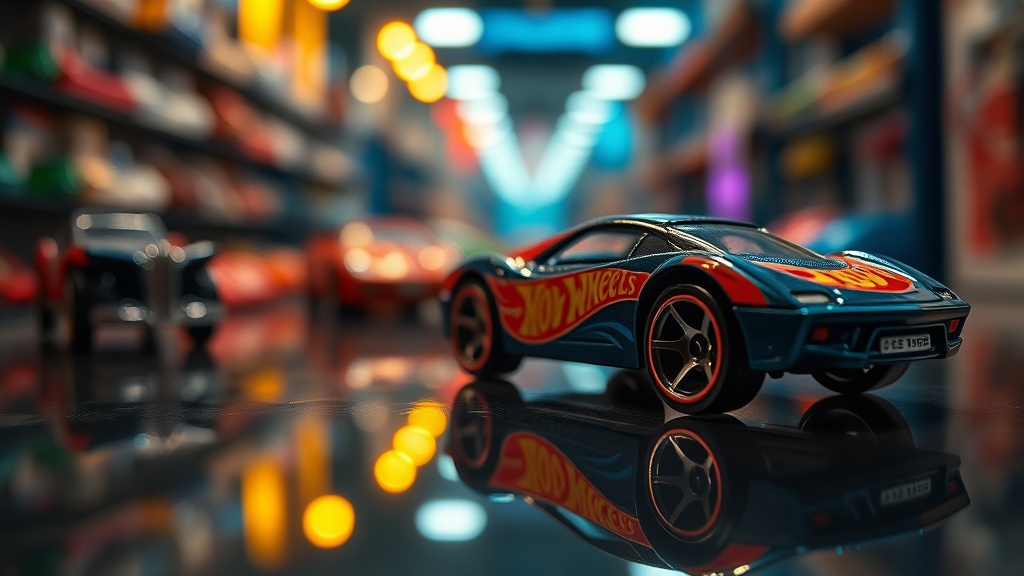
Beyond the Blister: Unveiling the Hidden Worth of Loose Hot Wheels in Your Collection

Beyond the Blister: Unveiling the Hidden Worth of Loose Hot Wheels in Your Collection
A common misconception plagues the Hot Wheels collecting community: the idea that only cars still sealed in their original blister packs hold any real value or significance. It’s an understandable notion, given the emphasis on "mint in package" condition in so many collecting circles. But dismissing every loose Hot Wheels car—those liberated from their cardboard and plastic prisons—is a mistake, and one that overlooks a rich, engaging, and often more accessible facet of the hobby. This isn’t just about economics; it's about the tangible connection to a car’s history, the joy of discovery, and the nuanced art of appreciating condition beyond factory-fresh. Handling a loose car, feeling its weight, and examining its details up close offers an intimacy with the casting that a sealed package simply can't provide. This article will unravel the complexities of collecting loose Hot Wheels, guiding you through comprehensive condition assessment, historical context, and the surprising value these unboxed gems can offer, proving that true treasure often lies beyond the blister.
What Distinguishes a Well-Preserved Loose Hot Wheels from a Plaything?
The line between a cherished collectible and a beat-up toy often seems blurry when it comes to loose Hot Wheels. Yet, for the discerning eye, specific indicators separate a car that’s seen countless trips down the orange track from one lovingly cared for, even after being freed from its packaging. It really comes down to a comprehensive condition assessment, much like grading a comic book or a baseball card, but with unique diecast considerations that require a keen attention to detail.
Begin your inspection with the paintwork. Are there chips, scuffs, or significant wear along the edges and raised details? Minor imperfections are expected with age and handling—a light rub here, a tiny fleck there—but extensive paint loss, particularly on the prominent surfaces or corners, dramatically impacts desirability. Also, consider the vibrancy; has the paint faded due to prolonged sun exposure, making a once brilliant Spectraflame finish look dull? Next, meticulously inspect the tampos, those printed graphics and decals on the car body. Are they complete, sharp, and free from fading, scratches, or flaking? Intact tampos speak volumes about a car’s life and careful handling.
Wheels are another critical area, acting as both historical markers and condition indicators. Are all the original wheels present and securely attached? Do they spin freely, or are the axles bent, perhaps causing a wobble or preventing the car from rolling smoothly? Sometimes a car will have mismatched wheel types, or even modern replacements—a clear sign of previous repairs, customization, or heavy play that deviates from its original state. For vintage Redlines, differentiate between the bearing wheels, capped wheels, and through-hole designs; damage to the redline stripe itself is also a significant factor. Examine the base plate too. Is it metal or plastic? Are all the screws present (if applicable), and is the copyright information, country of origin, and casting name clear and readable? A bent or scratched metal base isn’t ideal, but deep gouges, heavy corrosion, or a cracked plastic base can be significant detractors. Even the windshield and window plastics matter; look for cracks, deep scratches, or hazing that can obscure the interior details and detract from the car's overall presentation.
Understanding this spectrum—from "mint loose" (a car opened carefully and immediately stored, virtually untouched) to "played-with" (showing clear signs of its adventures, with wear commensurate with its age and use)—is key. Many collectors develop an appreciation for cars with character, valuing a well-loved piece that tells a story, but there's a distinct difference between charming character and outright neglect. A well-preserved loose car suggests it was valued by its previous owner, whether it was a child who played gently or an adult collector who simply preferred to display it unpackaged. It’s these specific, nuanced details that collectively tell the story of the car and profoundly inform its appeal to future owners.
Can Loose Hot Wheels Truly Hold Investment Value?
It’s easy to assume that once a Hot Wheels car is out of its package, any potential for significant financial value vanishes. This isn't entirely true, and it overlooks a substantial segment of the collector market that actively seeks out and values unpackaged examples. While carded examples of truly rare or pristine cars generally command the highest prices, a loose Hot Wheels can still be exceptionally valuable, often surprisingly so, representing a smart acquisition for the informed collector.
Consider vintage Redlines from the late 1960s and early 1970s. Many of these cars were bought specifically to be played with, as robust, high-performance toys. Finding them in mint, carded condition is incredibly difficult, making even well-preserved loose examples highly sought after and legitimately rare. A rare casting (like certain pre-production models), a desirable color variation (especially a short-run or promotional hue), or an early error car—even if loose—can fetch hundreds, sometimes thousands, of dollars depending on its condition and market demand. The key here is an intersection of genuine rarity combined with acceptable to excellent physical condition. A "Near Mint" loose Redline will almost always be more valuable than a common mainline car still on its blister card.
The demand for certain loose cars also extends beyond just vintage items. Think about specific series like the Hot Wheels Classics (with their iconic Spectraflame paints) or premium Real Riders editions, which collectors frequently open to display the intricate details and rubber tires. For these, a "mint loose" specimen, one carefully removed from its packaging without any subsequent play wear, can retain a very strong percentage of its carded value. This is especially true if the packaging was damaged or compromised, but the car itself remained flawless. The growing "Free It Friday" movement within the Hot Wheels community—where collectors intentionally open new releases to enjoy the cars themselves—further demonstrates that the joy and appreciation of the diecast extend well beyond the packaging. These collectors aren't necessarily devaluing their collection; they're prioritizing a different form of engagement. Furthermore, customizers often prefer loose cars as a base for their creative projects, driving a consistent demand for affordable, unpackaged models. For a deeper dive into the specific historical nuances and characteristics that define these early collectibles, resources like the