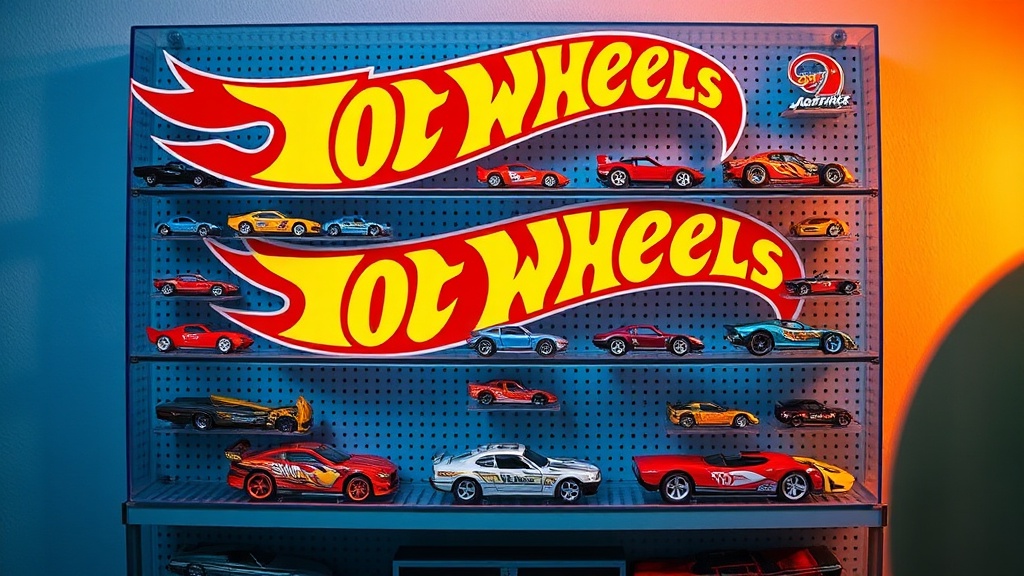
How to Display Your Hot Wheels Collection Like a Pro

This post covers practical, proven methods for displaying Hot Wheels collections — from wall-mounted solutions and custom shelving to protective cases and lighting setups. Whether the collection numbers fifty cars or five thousand, the right display transforms loose diecast models into a showcase worth admiring. Readers will learn how to protect carded vehicles, maximize limited space, and create a display that rivals museum-quality setups — all without breaking the bank.
What Are the Best Ways to Display Hot Wheels?
The best display methods depend on collection size, available space, and whether cars are kept in their original packaging or loose. Wall-mounted cases, acrylic risers, glass-front cabinets, and DIY shadow boxes each serve different collector needs. Here's the thing — there's no single "right" way. The approach that works best aligns with how the collector wants to interact with the cars day-to-day.
For carded collections (cars still sealed on their original blister cards), wall-mounted display cases reign supreme. The Carney Plastics Hot Wheels Display Case — available in 24-car, 48-car, and 108-car configurations — mounts flush to drywall and features individual slots that keep cards upright and visible. These cases run roughly $40–$120 on Amazon and protect cards from dust, fingerprints, and UV fading. (Collectors in humid climates should still consider adding silica gel packs inside — moisture sneaks in everywhere.)
Loose collectors — those who free their cars from packaging — often prefer tiered acrylic risers inside glass cabinets. The IKEA DETOLF ($79.99) remains a favorite in the Hot Wheels community for good reason. It's tall, narrow, and glass on three sides. Stack two or three Acrylic Display Risers from Clear-Ad inside each shelf, and suddenly a jumble of castings becomes a tiered showroom. Each car gets its moment in the spotlight.
For smaller collections or single-series showcases, IKEA RIBBA frames ($9.99) offer an elegant solution. Remove the backing, insert a thin sheet of foam board painted matte black, and mount cars with small dab of reusable mounting putty. The result looks like custom gallery art — perfect for a hallway or office wall. That said, RIBBA frames work best for 8–12 cars maximum. Cramming more inside defeats the purpose.
Wall-Mounted vs. Cabinet Displays
| Display Type | Best For | Approximate Cost | Pros | Cons |
|---|---|---|---|---|
| Carney Plastics Wall Case | Carded collections | $40–$120 | UV protection, lockable options, clean look | Requires drilling, limited capacity per case |
| IKEA DETOLF Cabinet | Loose cars, large collections | $79.99 | Spacious, affordable, widely available | Open shelves — dust accumulates quickly |
| IKEA RIBBA Frame | Featured sets, small displays | $9.99 | Stylish, easy to swap cars, no drilling | Very limited capacity |
| Custom Shadow Box | Themed dioramas | $30–$100+ | Fully customizable, unique presentation | Time-intensive to build |
| Acrylic Riser Sets | Tiered cabinet displays | $15–$40 | Maximizes visibility, reusable | Cars can slide if bumped |
How Do You Protect Hot Wheels Cards and Packaging?
Protecting Hot Wheels cards and packaging requires UV-resistant storage, acid-free materials, and careful handling to prevent edge wear, creasing, and yellowing. The blister card — that cardboard backing with the bubble — is half the value for many collectors. A mint car on a damaged card drops in worth significantly. Worth noting: protection starts the moment a car enters the collection, not after damage appears.
Ultra-PRO Soft Card Sleeves ($6.99 per 100 on Amazon) slide over carded Hot Wheels and shield against dust, oils, and minor scratches. For serious collectors, Ultra-PRO Semi-Rigid Card Holders (often called "top loaders") provide rigid protection against bends and creases. These cost around $12.99 per 25 — a small investment when protecting cars worth $20, $50, or even $200+.
Sunlight is the silent killer of blister cards. Even indirect window light causes cardboard fading over months. Display cases with UV-filtering acrylic — like those from Carney Plastics — block 98% of harmful rays. If using open shelves or cabinets, position displays away from windows. (North-facing rooms work best — minimal direct sun, consistent lighting.)
Humidity control matters too. Ottawa winters are dry, but summers get sticky — and that cardboard backing absorbs moisture like a sponge. Silica gel packets (available in bulk from Amazon or hardware stores) tucked inside display cases prevent the cardboard from warping. Replace them every three to four months, or whenever they feel saturated.
For loose cars — those liberated from packaging — protection looks different. Individual acrylic display cubes ($1–$3 each from Hobby Lobby) keep castings dust-free while still allowing 360-degree viewing. Stackable acrylic cases work well for larger loose collections, though they lack the wall-mounted elegance of carded displays.
What Lighting Setup Makes Hot Wheels Look Their Best?
LED strip lighting and puck lights positioned above or inside display cases make Hot Wheels look their best by highlighting metallic paint, chrome details, and casting contours without generating heat. Poor lighting — overhead room lights, yellow bulbs, direct sunlight — washes out colors and creates harsh shadows. The catch? Cheap lighting can look worse than no lighting at all.
Philips Hue Lightstrip Plus ($79.99 for a 2-meter strip) offers adjustable color temperature — warm white (2700K) brings out gold and orange castings, while cool white (5000K+) makes blues and silvers pop. Strips mount easily under cabinet shelves or along the top interior of a DETOLF. The app-controlled dimming means collectors can set the perfect brightness for photos or casual viewing.
For budget-friendly alternatives, Govee LED Strip Lights ($19.99 on Amazon) deliver surprisingly good color rendering at a fraction of the cost. The adhesive backing sticks to most surfaces, though collectors should test placement before committing — residue on acrylic cases cleans up poorly.
Puck lights — small, battery-powered LED discs — work well inside shadow boxes and RIBBA frames. Brilliant Evolution Wireless LED Puck Lights ($14.99 for 3 on Amazon) include remote dimming and a timer function. Position one above each car, angled slightly forward, and watch the metallic flake in premium castings come alive. (Battery life runs about 60–80 hours — keep spares handy.)
Avoid halogen or incandescent bulbs entirely. They generate heat that warps blister bubbles over time, and their yellow cast distorts true paint colors. LEDs stay cool, last years, and cost pennies to operate. That said, even the best lighting won't save a cluttered, overcrowded display. Light needs space to work its magic.
How Do You Organize a Large Hot Wheels Collection?
Large Hot Wheels collections stay organized through categorical sorting — by series, year, casting type, or color — combined with clear labeling and consistent spacing between vehicles. Chaos creeps in slowly. One car placed randomly becomes twenty, then the entire display descends into visual noise. A system — any system — prevents that slide.
Many collectors organize by series: Mainline, Treasure Hunts, Premium, Car Culture, Retro Entertainment, and so on. This works well because collectors often think in series terms when hunting. Others prefer year of release, creating a chronological timeline of Hot Wheels design evolution from 1968 to today. That said, year-based sorting demands meticulous record-keeping — not every collector enjoys that level of administration.
Casting-based organization groups all variations of a single model together — every '69 Camaro, every Datsun 510, every Custom '67 Mustang. This approach shines a spotlight on color variations, wheel swaps, and tampo differences that casual observers miss. It's how many long-term collectors think about their hobby. (Spotting a 2003 First Editions '69 Camaro next to a 2023 Red Line Club version tells a twenty-year story in two inches of shelf space.)
Color-coded arrangements create striking visual impact — all reds together, then oranges, yellows, greens. This looks incredible in photos and social media posts but sacrifices practical browsing. Finding that specific blue Porsche becomes a treasure hunt in itself.
Whatever system chosen, consistency matters. Use small label holders ( adhesive plastic clips from office supply stores) to mark sections. Leave breathing room — cars crammed edge-to-edge look like inventory, not a collection. Two finger-widths between vehicles lets each casting stand on its own.
Creative Display Ideas That Stand Out
Beyond standard cases and cabinets, creative displays turn collections into conversation pieces. A collector in the r/HotWheels Reddit community built a full garage diorama inside a repurposed TV cabinet — complete with miniature toolboxes, oil drums, and LED shop lights. Another collector mounted magnetic knife strips inside a shallow picture frame, allowing cars to attach directly — no shelves, no risers, just floating diecast.
Track-based displays showcase cars in motion. Mount a loop of Hot Wheels Orange Track ($14.99 for a 15-foot pack) along a wall in a gentle spiral, securing it with 3M Command strips. Place prized castings at various points along the track. It's playful, nostalgic, and instantly recognizable to anyone who ever sent a car flying across a kitchen floor.
Seasonal rotations keep displays fresh. Dedicate a small shelf or frame to Halloween-themed castings in October, holiday cars in December, muscle cars during summer car show season. It gives regular visitors something new to spot and justifies keeping a few extras in storage.
Don't overlook vertical space. Narrow walls between doorframes, the sides of bookshelves, even bathroom walls (sealed, humidity-controlled bathrooms only) can host small RIBBA frames or single-car acrylic mounts. Every square foot of display space counts in cramped apartments or shared living spaces.
Photography displays blur the line between collecting and art. Shoot high-resolution photos of favorite castings against clean backdrops, print them at 8×10, and frame them alongside the actual car. It's a technique borrowed from sneaker collectors and works surprisingly well with premium Hot Wheels — especially models with detailed engine bays or opening features worth highlighting.
"Collecting isn't about owning the most cars — it's about enjoying the ones you have. A display should make you smile every time you walk past it." — Common sentiment among veteran Hot Wheels collectors in Ottawa-area swap meets
The perfect Hot Wheels display balances protection, visibility, accessibility, and personality. It evolves as the collection grows. It reflects the collector's priorities — whether that's preserving mint cards, showcasing loose favorites, or building miniature worlds car by car. Start with what fits the space and budget today, knowing that every serious collector's display started with a single car on a single shelf. You'll know the setup is right when stopping to admire it becomes part of the daily routine — a small pause in a busy day, spent with forty years of automotive miniatures arranged exactly how you like them.
Steps
- 1
Choose the Right Display Case for Your Space
- 2
Arrange Your Cars by Theme or Series
- 3
Add Lighting and Background Elements