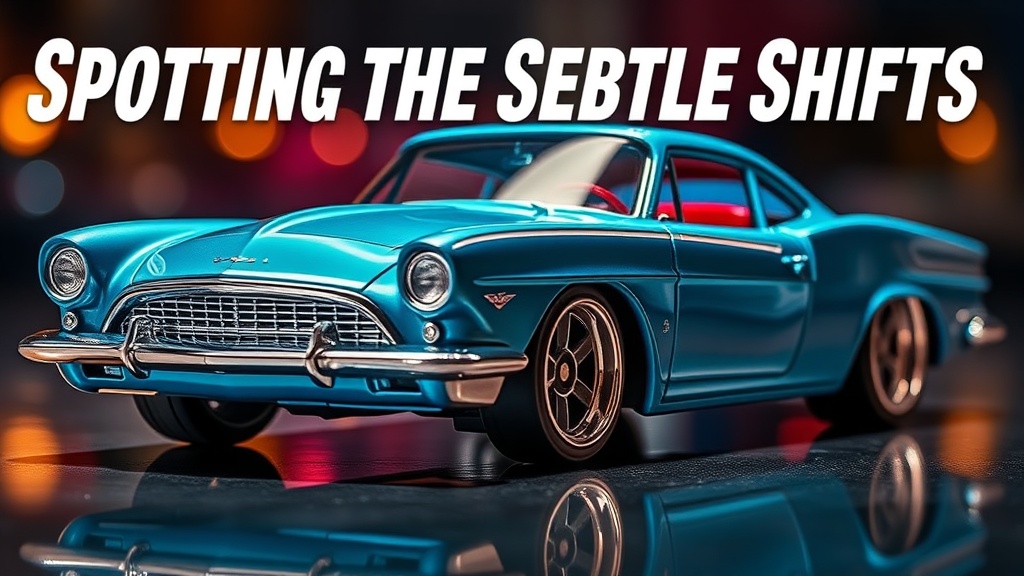
Spotting the Subtle Shifts: A Collector's Guide to Hot Wheels Variations

Understanding Hot Wheels Variations and Why They Matter
This guide will illuminate the captivating world of Hot Wheels variations, equipping you with the expertise to discern unique production differences that can add significant intrigue to your collection. Far from mere identical replicas, many Hot Wheels castings boast subtle — and sometimes not-so-subtle — distinctions, making the hunt for these anomalies a rewarding aspect of the hobby. Understanding these nuances isn't just for seasoned collectors; it’s a skill any enthusiast can cultivate to enrich their collecting journey and make more informed decisions about potential additions. From wheel changes to paint shade shifts, we'll explore what makes a variant, how to find them, and where to deepen your knowledge.
What Makes a Hot Wheels Variation Stand Out?
Hot Wheels variations occur when a manufacturer makes a change to a casting during its production run. These alterations might stem from a range of factors: supplier shifts, material availability, cost-cutting measures, or even simply updating a design. Sometimes, these changes are intentional; other times, they're the result of minor adjustments on the factory floor that weren't necessarily planned as distinct variants. The beauty of collecting variations lies in discovering these small deviations that set one car apart from another that initially looks identical.
You'll encounter several common types of variations in the wild. Perhaps the most easily recognizable are wheel variations. A car might be released with basic five-spoke wheels, then later in the year, the same model appears with a different wheel style—maybe a set of chrome open-hole wheels or Real Riders. These changes can dramatically alter a car's appearance and, for some castings, significantly impact desirability. Collectors often seek out specific wheel types, preferring the aesthetic or perceived rarity of one over another.
Paint variations represent another frequent area of difference. While a car might officially be released in, say, 'blue,' keen eyes can often spot distinct shades of that blue. One run might feature a lighter, brighter hue, while a subsequent batch appears in a deeper, more saturated tone. Even the finish can vary; a glossy application versus a more matte look on the same color can constitute a variation. These aren't always about error, but simply the natural range within a manufacturing process or an intentional shift in paint formulation.
Then there are tampo variations. Tampo refers to the decorative print applied to the car's body. These can include anything from racing numbers and sponsor logos to headlights and taillights. A variation here might mean a different logo placement, a slightly altered graphic design, or even an entirely missing tampo on one part of the car compared to another production run. Sometimes, a series of cars might omit a specific detail that was present on earlier releases, creating a distinct variant that collectors will actively seek. For example, a flame decal might appear on one side but not the other on certain batches.
Less common, but certainly present, are interior and base variations. The interior plastic might shift from black to gray, or the window tint could change from clear to smoked. Base variations typically involve the material—plastic versus metal—or minor mold differences in the text or manufacturing codes printed on the bottom of the car. While these are often harder to spot without opening the packaging, they still contribute to the rich tapestry of Hot Wheels variations.
How Can Collectors Identify Unique Production Anomalies?
Identifying variations requires a sharp eye and a methodical approach. It's often about comparing a suspected variant against a known standard version of the same casting. The first step is always thorough visual inspection. Don't just glance; scrutinize every detail: wheels, paint, tampos, and even the base if you're able to compare out-of-package examples.
For those still in their blister packs, wheel and paint variations are usually the easiest to spot. Hold two seemingly identical cards side-by-side under good lighting. Even minute differences in wheel hub design or paint gloss can become apparent. Tampo variations can also be visible through the blister, especially if they involve large graphics or obvious omissions. The codes on the back of the card can sometimes indicate different production batches, offering a clue, though these aren't always definitive markers of a variation itself.
Beyond standard variations, there's the realm of production errors, often dubbed 'error cars.' These aren't intentional changes but rather mistakes that slip through quality control. Examples include missing tampos entirely, misaligned tampos, cars with mismatched wheels (e.g., two different types on one axle), cars with missing wheels, inverted interiors, or even castings inserted backward on the card. True error cars are often highly sought after by some collectors due to their rarity and unique story. However, it's crucial to distinguish between a genuine factory error and a damaged car. A dented car or a missing wheel due to rough handling isn't an error; it's just damage. A true error left the factory in its flawed state.
You'll want to exercise caution when assessing potential errors. Not every anomaly is a valuable error; some are just slight imperfections. What's considered a significant error is often defined by the collecting community. For instance, a car with no tampos at all is generally more noteworthy than one with a slightly crooked decal. Having a reference car for comparison—either a physical one or high-quality images from a trusted database—is your best defense against misidentification.