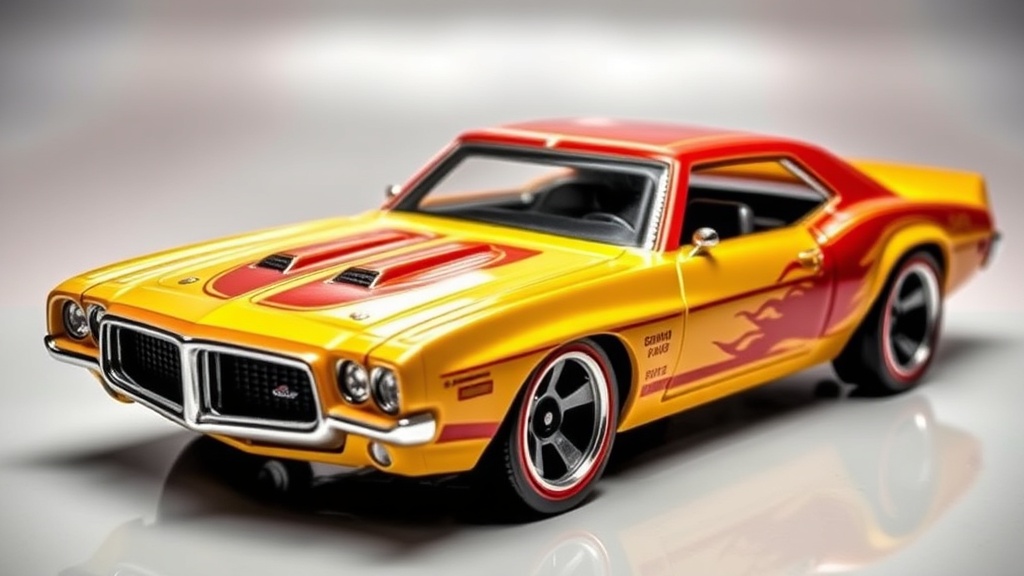
The 10 Most Valuable Hot Wheels Cars Every Collector Dreams Of Owning

1969 Pink Rear-Loader Beach Bomb
1968 Cheetah Base Python
1969 Brown Custom Charger
1970 Red Baron with White Interior
1968 Custom Camaro in Antifreeze Green
Certain Hot Wheels cars command prices that would make most collectors' jaws drop. This post breaks down the ten most valuable Hot Wheels ever produced—what makes them rare, what collectors pay for them, and why these tiny die-cast vehicles fetch amounts that rival some full-sized automobiles. Whether hunting for a hidden gem at a garage sale or simply curious about what separates a $1 toy from a $100,000 collectible, you'll find concrete examples and real market values here.
What Makes a Hot Wheels Car Worth Thousands of Dollars?
Rarity drives value. The most expensive Hot Wheels share common traits: limited production runs, manufacturing errors, special editions, or prototype models that escaped Mattel's factories. Condition matters tremendously—a "Mint in Package" (MIP) car can be worth ten times its loose equivalent.
The collector market operates similarly to fine art or vintage wine. Scarcity creates demand. The Mattel production line occasionally produces variants that weren't supposed to exist. Pink Rear-Loader Beach Bomb prototypes. White enamel errors on early Redlines. These mistakes—caught quickly and recalled—became legends.
Provenance plays a role too. Cars with documented ownership history, original receipts, or authentication from recognized experts like Mike Zarnock (author of the Hot Wheels Identification and Price Guide) command premiums. The catch? Fakes exist. Experienced collectors learn to spot reproductions—modern paint on vintage bodies, retooled wheels, or reproduction stickers that look almost right but aren't.
"The holy grails aren't just rare. They're rare with a story." — Mike Zarnock, Hot Wheels historian
Age alone doesn't determine value. Millions of common Redlines from 1968-1977 sell for under $20. True collectibles combine age, condition, and that intangible factor—desirability among serious collectors.
Which Hot Wheels Car Sold for the Highest Price Ever?
The 1969 Pink Rear-Loader Beach Bomb prototype holds the record, selling for approximately $150,000 in a private sale. Only two known examples exist. Both feature a unique surfboard-loading mechanism at the rear (hence "Rear-Loader") rather than the side-mounted version that went into mass production.
The prototypes used a different mold entirely. They're slightly longer than production Beach Bombs. The surfboards slide through the rear window—an engineering choice Mattel abandoned because the cars wouldn't stay on the track properly. The center of gravity was wrong.
Both surviving examples are pink—Mattel's least popular color at the time. The story goes that employees grabbed whatever paint was available for test runs. Pink happened to be what sat on the shelf.
One Pink Beach Bomb lives in collector Bruce Pascal's collection (he's estimated to have spent over $1 million on Hot Wheels). The other changed hands in that record-breaking sale. Neither has appeared at public auction in decades.
The Rear-Loader vs. Side-Loader Distinction
Here's where casual collectors get confused. Mattel did release a Beach Bomb to stores—but it's the Side-Loader variant. That version loads surfboards through the side windows. It's collectible (worth $200-$800 depending on color and condition) but not in the same universe as the prototypes.
Worth noting: several "reproduction" Rear-Loaders exist. Unscrupulous sellers modify Side-Loaders or cast new bodies. Authentication requires expert examination—checking mold marks, paint composition, wheel type, and construction details invisible to casual observers.
What Are the Most Valuable Hot Wheels From the Original 1968 Sweet Sixteen?
The original sixteen Hot Wheels models—released in 1968—established the brand. Several command serious money today. Custom Camaros in certain colors. Beatnik Bandits with specific wheel variations. The Python in white enamel.
The Custom Camaro in chocolate brown stands out. Mattel produced very few in this color—it wasn't popular with kids. Surviving examples in excellent condition sell for $3,000-$5,000. The same model in more common colors (red, blue, green) might fetch $100-$300.
The Beatnik Bandit—designed by Ed "Big Daddy" Roth—came in several colors. Aqua and purple are common. Copper and antifreeze green? Much harder to find. A copper Beatnik Bandit with "Spectraflame" paint and original redline tires can sell for $2,000+.
| Model | Common Color Value | Rare Color Value | Key Variation |
|---|---|---|---|
| Custom Camaro | $100-$300 | $3,000-$5,000 | Chocolate brown, white interior |
| Beatnik Bandit | $150-$400 | $2,000-$4,000 | Copper or antifreeze Spectraflame |
| Python | $200-$500 | $5,000-$8,000 | White enamel (error color) |
| Custom Mustang | $80-$250 | $1,500-$3,000 | Olive green, white interior |
| Silhouette | $100-$300 | $1,200-$2,500 | Purple with white interior |
The Python's white enamel variant represents a production error. Mattel intended the car for standard Spectraflame colors—the translucent metallics that defined early Hot Wheels. Some machines loaded white enamel instead. Workers caught most mistakes. A few escaped into blister packs.
Are Error Cars and Prototypes Worth More Than Regular Releases?
Generally, yes—if authentic. Error cars (manufacturing mistakes that reached consumers) and prototypes (pre-production models) occupy the top tier of Hot Wheels collecting. That said, not every "error" increases value. A misaligned decal on a 2010 mainline car? Nobody cares. A white enamel Python from 1968? That's different.
The 1969 Brown Custom Charger exemplifies this perfectly. Mattel produced the Charger in various colors—red, green, gold. Brown slipped through somehow. Experts estimate fewer than twenty exist. One sold at auction for $13,000. The same model in red? Maybe $150.
Prototypes require even more caution. Mattel destroys most pre-production samples. The few that escape—often through employees or factory visitors—become legendary. The Pink Rear-Loader Beach Bomb started as a prototype. So did the 1968 Cheetah (later renamed Python) in certain test colors.
Redline Era Treasures (1968-1977)
"Redline" refers to the red stripe on early Hot Wheels tires. These cars form the backbone of serious collecting. The Toy Car Collector database tracks thousands of Redline variations.
Beyond the Sweet Sixteen, several Redlines stand out:
- Olive Olds 442 — The 1971 release in olive green with white interior commands $3,000-$6,000. Most came in purple or magenta.
- Blue Rodger Dodger — 1974 release. The blue variant is impossibly rare—perhaps a dozen exist. Valued at $8,000-$12,000.
- Green Hong Kong Mustang — Manufacturing location matters. Hong Kong-produced Mustangs in certain colors carry premiums. The green version with specific wheel types reaches $2,500+.
Here's the thing about Redlines: reproduction parts flood the market. Fake wheels. Reproduction decals. Even complete fake cars cast from original molds. Authentication requires examining baseplates, paint texture, and wheel construction—details that separate $5,000 from $50.
Do Modern Hot Wheels Ever Become Valuable?
Absolutely—though the timeline compresses. Vintage cars took decades to appreciate. Modern releases can spike within years (sometimes months) if production errors occur or special editions sell out instantly.
The 1995 Treasure Hunt Series started the modern limited-edition trend. Mattel produced these in intentionally small quantities—sometimes 1 per case of 72 cars. Early Treasure Hunts like the '67 Camaro or Model T now sell for $200-$500 sealed. At release? $2.
Recent examples include:
- 2013 Super Treasure Hunt Batman Batmobile — Regular release: $3. Super Treasure Hunt with Real Riders wheels and Spectraflame paint: $400-$600.
- 2018 '71 Datsun 510 from the Japan Historics set — Premium line, limited run. Originally $5. Now $150-$250 loose, $400+ in package.
- 2020 Red Edition Target exclusives — The '71 Porsche 911 in red. Short production window. Currently $80-$150 depending on condition.
Convention cars represent another category. The Hot Wheels Collectors Convention produces exclusive models for attendees. A 2001 Convention '41 Ford in purple with Real Riders wheels? $800-$1,200. The 2019 Convention '55 Chevy Bel Air Gasser? Already $300+.
How Do You Spot a Valuable Hot Wheels Car in the Wild?
Garage sales, estate sales, thrift stores—treasure exists. Most sellers don't recognize rare variants. A Pink Rear-Loader Beach Bomb might sit in a shoebox marked "toy cars $1 each." (Yes, this has happened—collector folklore includes several stories of six-figure finds at yard sales.)
Here's what to examine:
- Base text — Flip the car. "Hong Kong" or "USA" markings matter. Some models only came from specific factories in rare colors.
- Paint finish — Spectraflame (translucent, metallic, see-through in light) indicates 1968-1972 Redlines. Opaque enamel in that era suggests an error.
- Wheel type — Early Redlines have specific construction. Cap wheels. Bearing wheels. The details separate $10 cars from $1,000 cars.
- Interior color — White interiors on certain models multiply value. Brown interiors on others. It's model-specific.
The catch? Condition destroys value fast. Paint chips. Bent axles. Chrome wear. A $5,000 car with significant play wear might be worth $200. Collectors want display pieces—cars that look like they left the factory yesterday.
Authentication Resources
Before spending serious money, verify. The Hot Wheels Identification and Price Guide (updated annually) remains key. Online communities like r/HotWheels provide quick identification help—though take pricing advice cautiously.
Professional grading services (CAS - Collectible Authentication Services) will examine and encapsulate valuable finds. Cost: $30-$100 per car. Worth it for anything potentially worth four figures.
What About the 2008 40th Anniversary Diamond-Encrusted Car?
Mattel commissioned a one-off promotional piece: a Custom Otto encrusted with diamonds, rubies, and white gold. Value? Approximately $140,000. It toured auto shows and collector events. Not available for purchase—purely a publicity piece.
Technically, this is the "most valuable" Hot Wheels ever created. But since it's a custom art piece rather than a production (or even prototype) model, most collectors don't count it in their lists. It's a sculpture wearing Hot Wheels branding.
The promotional car did generate legitimate collectibles—40th Anniversary series releases in 2008 featuring special packaging and exclusive colors. These remain affordable ($10-$50) but may appreciate as that anniversary recedes into history.
Collecting Hot Wheels at the highest level requires knowledge, patience, and substantial capital. The cars listed here represent the absolute peak—objects that combine childhood nostalgia with genuine investment-grade scarcity. For most collectors, owning one would be the culmination of decades of searching. For the lucky few who find them at estate sales or tucked away in forgotten storage boxes? That discovery changes everything.