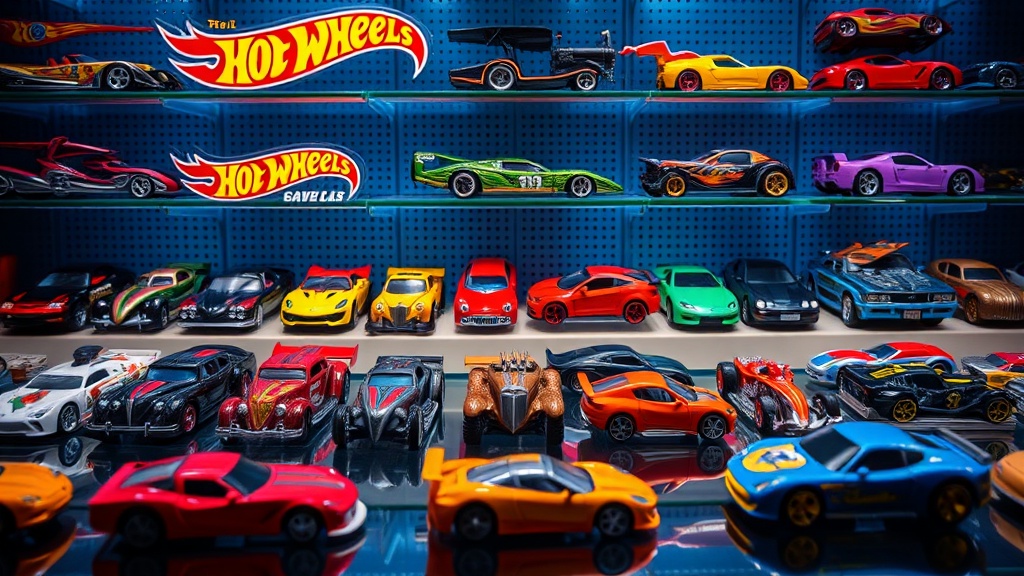
The Ultimate Guide to Storing and Displaying Your Hot Wheels Collection

This guide covers everything needed to protect, organize, and showcase Hot Wheels die-cast vehicles — from basic storage solutions that prevent dust and sun damage to professional display setups that turn collections into conversation pieces. Whether someone owns twenty cars or two thousand, proper storage methods preserve value, prevent paint fade, and make finding specific models far easier than digging through cardboard boxes.
What's the Best Way to Store Hot Wheels Long-Term?
The best long-term storage keeps cars protected from UV light, moisture, and physical contact while allowing easy access. Hot Wheels vehicles are surprisingly resilient — they're die-cast metal with plastic parts — but they're not indestructible. Paint can chip. Wheels can yellow. Decals can peel.
Start with the basics. Sunlight is the enemy. UV rays fade Spectraflame paint (those beautiful translucent colors from the Redline era) and can make white plastics turn brittle and cream-colored. Store collections in a dark closet, basement, or room with blackout curtains.
Temperature matters too. Extreme heat warps plastic bases. Extreme cold makes them brittle. Aim for stable room temperature — 60-75°F — with low humidity. Ottawa winters are actually pretty ideal. Summers get sticky, so a dehumidifier helps if storing in basements.
Here's the thing about containers: not all plastic is created equal. Cheap PVC bins can off-gas chemicals over time. Look for archival-quality storage — Sterilite ClearView Latch boxes are widely used by collectors, or specialty cases from Plano designed for tackle and small parts. These use polypropylene, which won't react with paint or metal.
For loose cars (out of package), individual protection beats dumping them in a bin together. Cars rubbing against cars causes paint wear — "wheel rub" on the sides, chipped edges, broken mirrors. Options include:
- Pro-Tech car sleeves — soft plastic pockets, cheap, stackable
- Hot Wheels branded cases — hold 48 cars, stack neatly, about $15-20
- Die-cast storage boxes with foam inserts — pricier, but museum-grade protection
- Shot glass display cases — surprisingly perfect fit, found at craft stores
For carded cars (still in original blister packs), the blister itself needs protection. Those clear plastic bubbles scratch easily and can crack. Protech Star Case protectors slide over the cardback and bubble — about $0.50-1 each when bought in bulk. Worth noting: keep carded cars flat or slightly angled. Standing them vertically stresses the glue holding the bubble.
How Should You Display Hot Wheels Instead of Hiding Them?
Displaying Hot Wheels means balancing visibility, protection, and available space — wall-mounted cases work for large collections, while acrylic stands suit smaller curated selections. A collection hidden in bins brings zero joy. But displaying without protection means dust, accidents, and fading.
Wall-mounted options dominate serious collecting. The Hot Wheels 83-Car Display Case (available at Walmart and hobby shops) mounts like a shadow box — black frame, clear front, individual slots. Stack two or three and you've got a statement wall. The catch? They're about $25-30 each, and 83 cars fills up fast when you're hunting multiple castings.
For custom builds, IKEA offers affordable solutions. The FLISAT wall storage series — meant for children's art supplies — has shallow shelves perfect for 1:64 scale. The MOSSLANDA picture ledge (under $10) displays loose cars in a row, though you'll want to secure them with small adhesive dots if pets or kids are around.
Acrylic risers — those tiered clear plastic stands — work brilliantly on desks, shelves, or inside glass cabinets. Clear-Ad and Marketing Holders make risers specifically sized for die-cast. Three-tier, five-tier, even rotating options. Prices range from $8 for basic stands to $40 for motorized rotating displays.
Lighting transforms displays. LED strip lights (the Philips Hue Play or cheaper Govee options) mounted above cases create that "toy store" glow. That said — avoid heat-generating bulbs. LEDs only. Incandescent bulbs near plastic bubbles is asking for warping.
"The best display is one you'll actually update. If it's a pain to open the case, you'll leave new finds in bins for months." — Common advice from the Ottawa Die-Cast Collectors group
For the truly committed, room-scale solutions exist. Pegboard walls (think hardware store style) with custom hooks let you hang carded cars like merchandise. Some collectors build entire "showrooms" with miniature dealership aesthetics — tile flooring backdrops, fluorescent lighting, even tiny showroom signs printed from eBay.
What's the Difference Between Loose and Carded Storage?
Loose storage prioritizes space efficiency and accessibility; carded storage focuses on preserving packaging condition and preventing bubble damage. This choice shapes everything — container size, display options, even how you handle the cars.
| Factor | Loose Cars | Carded Cars |
|---|---|---|
| Space needed | Compact — cars nest together | Bulky — cards require 3x5" minimum per vehicle |
| Protection priority | Paint, wheels, castings | Cardback art, bubble clarity, unpunched hooks |
| Best containers | Slot cases, foam inserts, divided trays | Star cases, comic book boxes, flat files |
| Display flexibility | High — arrange by color, series, theme | Limited — must protect card orientation |
| Value preservation | Moderate — condition still matters | Highest — original packaging drives premium prices |
Most collectors eventually mix both approaches. Treasure Hunts, Super Treasure Hunts, and premium series like Car Culture or Team Transport stay carded. Mainlines — the $1.25 cars found at Loblaws, Canadian Tire, or Dollarama — go loose into cases for easy wheel-swapping and customization.
Special Cases: RLC, Conventions, and High-Value Pieces
Red Line Club exclusives, convention cars, and limited editions (under 5,000 produced) demand extra care. These often ship in acrylic cases already — leave them sealed. The Hot Wheels Collectors Convention vehicles from Mattel's collector site can fetch $200-500 within years of release if kept pristine.
For these, consider:
- Safety deposit boxes — seriously, for the truly valuable stuff
- Fireproof home safes — SentrySafe and similar brands, rated for documents
- Desiccant packets — silica gel in every storage container
- Documentation photos — high-res images of condition, stored digitally
How Do You Organize Thousands of Cars?
Large collections need categorization systems — by year, series, casting, or theme — combined with inventory tracking to prevent duplicate purchases. The average collector owns 500+ cars within five years of starting. Without organization, that's just expensive clutter.
Common sorting methods:
- By casting — all '67 Camaros together, all Datsun 510s together — great for wheel swappers and customizers
- By series/year — 2024 Mainline A case, B case, etc. — how completionists track hunting progress
- By theme — rally cars, muscle cars, fantasy castings, Japanese classics — visually satisfying for displays
- By color — surprisingly popular for photography and Instagram-worthy arrangements
Inventory management apps help. RLC Tracker (mobile app) scans barcodes and tracks values. Spreadsheets work too — Google Sheets with columns for casting name, series, color, purchase date, price paid, and current estimated value. Update quarterly. Prices fluctuate based on new movie tie-ins, retirements, and collector trends.
That said, don't let organization kill the fun. Some collectors spend more time sorting than enjoying. The sweet spot? Loose cars sorted broadly (by series, maybe), carded cars stored by value/era, and a "rotation" display of favorites that changes monthly. Keeps the collection feeling fresh without constant reorganization.
Climate and Regional Considerations
Ottawa's climate swings from -30°C winters to humid 30°C summers. Basements flood. Attics bake. If storing in garages, expect temperature swings to cause condensation inside cases — that's how metal develops surface rust and cards get water stains.
Climate-controlled interior rooms work best. Spare bedrooms, closets, under-bed storage in guest rooms. If basement storage is unavoidable, use moisture barriers — sealed containers with desiccant, raised on pallets or shelving (not directly on concrete floors), and check everything seasonally.
Pest control matters too. Silverfish eat cardboard. Mice chew plastic. Inspect storage areas quarterly. Cedar blocks or mothballs (though they smell terrible) protect against insects. Steel shelving defeats rodents better than wood or plastic.
The Bottom Line on Storage Investment
Budget $1-3 per car for proper storage and display. Sounds steep when multiplied by 500 cars. But consider — a $1.25 mainline car in perfect condition might sell for $5-10 later. A sun-faded, paint-chipped version sells for nothing. Good storage pays for itself.
Start small. Buy one quality display case. Protect the best pieces first. Add storage as the collection grows. The hunt for Hot Wheels should end with satisfaction, not anxiety about where to put the next bag of finds from that successful Walmart run.