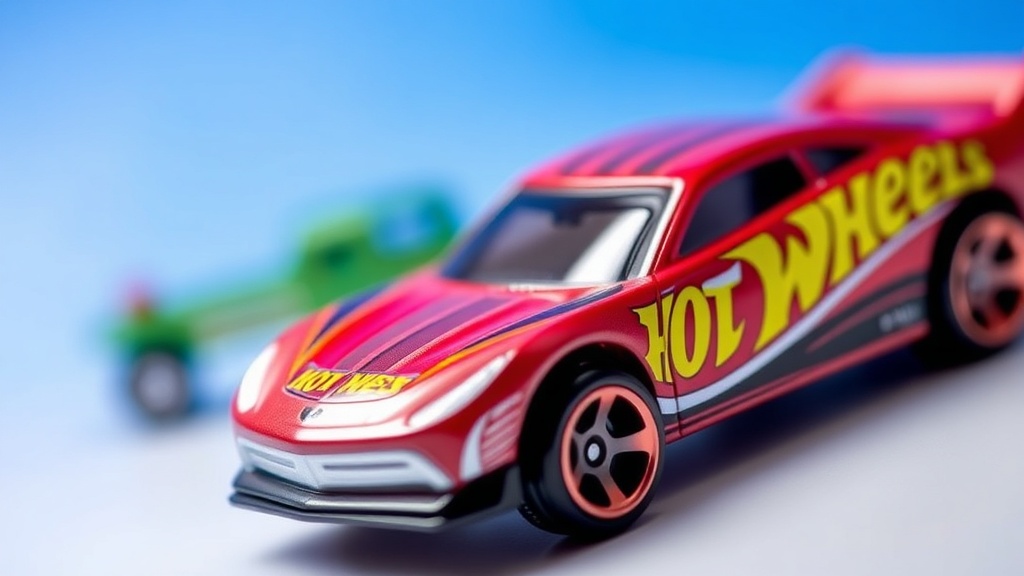
The Ultimate Hot Wheels Collecting Guide for Beginners and Veterans

This guide breaks down everything needed to start, grow, and protect a Hot Wheels collection — from spotting rare castings to storing hundreds of cars without warping the cards. Whether someone just picked up their first $1.25 mainline at Canadian Tire or has been hunting Super Treasure Hunts since the '90s, there's practical advice here that'll save money, space, and frustration.
What Are the Best Hot Wheels Cars to Collect?
The best Hot Wheels cars to collect depend on budget, available space, and what actually excites the collector. Mainline singles offer the lowest barrier to entry — usually priced between $1.25 and $2.50 CAD in Canada — and new castings drop roughly every two months. For those with a bit more to spend, the Car Culture and Pop Culture premium lines feature metal bases, rubber tires, and licensed graphics that photograph beautifully on a display shelf.
Here's the thing: rarity doesn't always equal enjoyment. Some collectors chase Super Treasure Hunts — limited-run mainlines with special paint, wheels, and a tiny flame logo behind the vehicle — while others prefer complete themed sets like the Boulevard series or vintage Redlines from the 1960s and '70s. Both paths are valid. The catch? Chasing only high-dollar items can burn out a collector fast if the hunt stops being fun.
A simple framework for deciding what to collect:
- By casting: Focus on one vehicle — the Datsun 510, Porsche 934, or '70 Ford Escort RS1600, for example.
- By series: Collect every release in Car Culture, Fast & Furious, or Batman-themed sets.
- By era: Stick to vintage Redlines, '90s models, or only 2020s releases.
- By condition: Some collectors buy only carded (unopened) cars; others want loose display pieces they can handle.
Worth noting: the Hot Wheels Wiki maintains an exhaustive database of every casting, color variation, and series release — an invaluable resource when verifying whether a car is truly rare or just oddly packaged.
What’s the Difference Between Mainline and Premium Hot Wheels?
Premium Hot Wheels use higher-quality materials, more detailed paint applications, and rubber tires instead of the plastic ones found on standard mainlines. Mainlines are the familiar $1.25 cars hanging on pegs at Walmart, Toys "R" Us, and Dollarama. They're mass-produced, often feature fantasy castings alongside licensed vehicles, and come on thin blister cards.
Premium lines — including Car Culture, Fast & Furious, Entertainment, and Red Line Club (RLC) releases — sit at higher price points ($6 to $30+ CAD) and target adult collectors. The metal content is heavier. The tampos are sharper. And the packaging? Often designed with display in mind.
| Feature | Mainline | Premium (Car Culture / RLC) |
|---|---|---|
| Price (CAD) | $1.25 – $2.50 | $6.00 – $35.00+ |
| Tires | Plastic | Rubber |
| Base Material | Metal or plastic mix | Zamac / metal (heavier) |
| Packaging | Standard blister card | Thick card, acrylic cases, or metal tins |
| Production Run | Mass market | Limited / numbered |
| Best For | Collecting volume, casual hunting | Display, investment, detail appreciation |
That said, don't snub mainlines. Some of the most valuable Hot Wheels cars in history — like the 1995 Treasure Hunt '67 Camaro or the 2006 Super Treasure Hunt '69 Corvette — started life as standard peg warmers before scarcity drove prices into the hundreds.
How Should You Store and Protect a Hot Wheels Collection?
Storing Hot Wheels correctly means protecting the blister card, the paint, and the wheels from humidity, direct sunlight, and pressure damage. For carded cars, vertical storage in protector cases — such as the Protech Star Cases or soft PP5 plastic sleeves — prevents edge wear and "card curl," that ugly bowing that happens when cardboard absorbs moisture.
Loose cars need different care. A stack of die-cast metal will scratch paint and bend axles faster than most people expect. The best approach? Individual compartments. Plano tackle boxes, Hot Wheels-brand 48-car carrying cases, or custom acrylic display steps keep models separated and dust-free. For larger collections, Really Useful Boxes (available at most Canadian office supply stores) stack neatly and seal out moisture.
Ottawa's climate is worth mentioning here. Winters are dry. Summers swing humid. Basements in the National Capital Region are notorious for mid-summer dampness, so storing a collection directly against concrete walls is asking for rusted axles and musty cards. A dehumidifier — even a small Eva-dry unit — pays for itself quickly.
A few quick don'ts:
- Don't store carded cars horizontally in piles. The weight of upper layers crimps blister bubbles.
- Don't leave cars on windowsills. UV fade is permanent, and red paint is especially vulnerable.
- Don't use rubber bands to bundle cars. The rubber off-gasses and can melt into plastic wheels over time.
Where Can You Find Rare Hot Wheels in Canada?
Rare Hot Wheels turn up in big-box retailers, independent toy shops, online marketplaces, and estate sales — but timing and relationships matter more than luck. In Canada, Walmart and Canadian Tire receive the bulk of new mainline cases. Collectors who learn delivery schedules (often mid-week) get first pick of fresh dump bins and peg restocks.
Toys "R" Us carries exclusive sets — particularly around holidays — and some locations stock premium lines that never appear at grocery stores. Independent hobby shops in Ottawa (like The Comic Book Shoppe on Bank Street) occasionally source older inventory, convention exclusives, and Canadian-market variants that big chains skipped.
Online, eBay and Facebook collector groups dominate the secondary market. The catch? Prices fluctuate wildly. A casting worth $8 in one group might be listed for $40 in another. Always cross-reference sold listings, not active asking prices, before buying. The official Mattel Hot Wheels store also runs the Red Line Club — a membership program that grants access to limited-release vehicles sold directly by the manufacturer.
For high-value purchases, stick to sellers who provide clear photos of the card front, card back, and blister bubble. If the seller won't photograph the bottom of the car? That's a red flag. Reproduction bases and swapped wheels are more common than newcomers realize.
Why Do Some Hot Wheels Cars Increase in Value?
Value increases when demand outpaces supply — and in the Hot Wheels world, that usually means short production runs, popular castings, or packaging errors. Super Treasure Hunts are intentionally scarce (roughly one per case, sometimes less). RLC releases are often capped at 20,000 to 30,000 units globally. And casting variations — like the famous "Tampo Error" '71 Datsun 510 Wagon — become accidental legends when collectors spot them early.
Pop culture timing plays a role too. When a vehicle appears in a blockbuster film — think the Fast & Furious Toyota Supra or the Stranger Things Cadillac — related Hot Wheels castings typically spike in price for six to twelve months. The same happens when a real-world driver wins a major race; their casting often sells out within days.
That said, treating Hot Wheels purely as an investment is risky. Most mainlines will never be worth more than their original price. The ones that appreciate are exceptions, not rules. Collect because the cars are beautiful, nostalgic, or fun to hunt — and if a casting happens to double in value, that's a bonus, not a business plan.
Red Flags When Buying "Rare" Cars
The secondary market has its share of scams. Here's what to watch for:
- Re-sealed blisters: Look for glue residue, uneven sealing lines, or cards that feel too stiff. A factory seal is smooth and consistent.
- Wheel swaps: Check that all four wheels match in style and color. Swappers love replacing stock wheels with premium Real Riders to inflate prices.
- Fake Super Treasure Hunts: The flame logo behind the car should be crisp. Blurry or off-center tampos are often custom jobs.
- Misleading grading: Terms like "mint" and "near mint" have no standardized meaning in die-cast collecting. Ask for photos, not adjectives.
Community and Resources
Collecting alone is fine. Collecting with a community is better. Ottawa has an active Hot Wheels scene — monthly meetups at hobby shops, swap tables at comic conventions, and a handful of dedicated Instagram accounts documenting local hauls. Online, Reddit's r/HotWheels remains one of the most helpful places for price checks, identification help, and restock reports.
Whether the collection fits in a shoebox or fills an entire wall of acrylic cases, the principles stay the same: buy what appeals to you, store it carefully, and stay skeptical of anything that sounds too good to be true. Happy hunting.