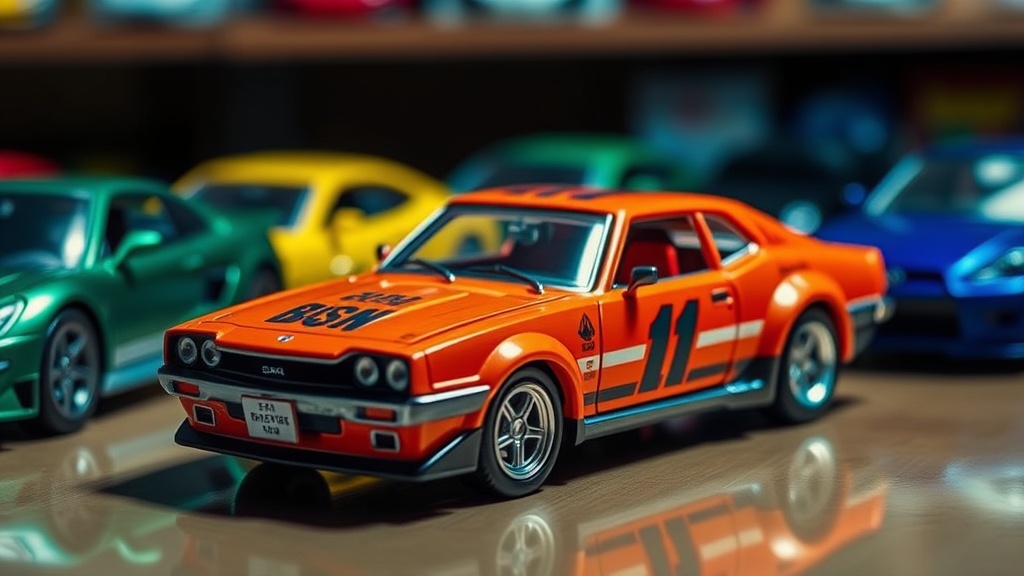
Why are JDM Diecast Cars Taking Over Your Local Toy Aisle?

Ever wondered why that tiny Datsun 510 on the pegs has a dozen grown men hovering over it at 7:00 AM? You aren't alone. If you've walked down the toy aisle in Ottawa lately—or anywhere else for that matter—you might notice something strange. The shelves aren't just filled with the usual flame-painted muscle cars or futuristic fantasy castings. Instead, you'll see a sea of Nissan Skylines, Honda Civics, and Toyota Supras. The Japanese Domestic Market (JDM) trend has hit the diecast world like a ton of bricks, and it shows no signs of slowing down. This post covers why these small-scale imports have become the gold standard for modern collectors and why they've pushed traditional American iron off the top spot.
It's not just about the cars themselves; it's about who's buying them. The collector base has shifted. People who grew up playing racing simulators or watching late-night drift videos are now the ones with the disposable income. They don't want their dad's '57 Chevy. They want the car they drove in a video game or the one they see at local car meets. This shift has forced brands like Hot Wheels to rethink their entire strategy. It's led to a massive increase in detail, better wheel choices, and a focus on authenticity that we didn't see twenty years ago. Let's look at how we got here and what it means for your collection.
Why did Japanese cars become so popular with Hot Wheels collectors?
The rise of Japanese diecast isn't an overnight success story. It's been building for over a decade. For a long time, Mattel focused almost entirely on domestic classics. If you wanted a Japanese car, you usually had to look at brands like Tomica. That changed when designers who actually loved these cars started working in the California studios. Designers like Jun Imai brought a personal passion for Japanese car culture to the drafting table. He didn't just design a car; he designed a culture. His Datsun 510 Bluebird casting is widely cited as the spark that lit the fire. It was clean, it was cool, and it looked exactly like something you'd see on the streets of Tokyo or at a SoCal car show.
Another big factor is the global nature of car culture now. Social media and YouTube have made it so a kid in Canada can be just as obsessed with a "hakosuka" Skyline as someone living in Japan. We're seeing a shared digital history that translates directly into toy sales. When a rare variant of a Nissan Silvia drops, the news travels around the world in seconds. Collectors aren't just looking for toys anymore; they're looking for pieces of a global aesthetic. This demand has created a secondary market that's frankly a bit wild. Some of these dollar cars end up selling for fifty times their retail price just because they have the right "livery" or wheels. It's a high-stakes game played on a very small scale.
You also have to consider the "Real Riders" factor. When Hot Wheels started putting premium rubber tires on these Japanese castings in their Car Culture and Boulevard lines, things went to another level. Suddenly, these weren't just toys for kids to bash around on orange tracks. They were display pieces that looked great on a desk or a shelf. The metal-on-metal construction (metal body and metal chassis) gave them a weight and feel that felt "premium." For a collector, that tactile experience is a big deal. It makes the hobby feel more like high-end model collecting and less like buying toys from a grocery store bin.
| Car Model | First Release Year | Popular Series | Collectibility Level |
|---|---|---|---|
| Datsun 510 | 2009 | Bluebird, Car Culture | Extremely High |
| Nissan Skyline GT-R (R34) | 2010 | Fast & Furious, Boulevard | Legendary |
| Toyota AE86 Sprinter Trueno | 2006 | Initial D (unofficial), Cult Classics | High |
| Honda Civic Type R (EK9) | 2021 | Mainline, Modern Classics | Rapidly Rising |
What are the most sought-after JDM castings right now?
If you're looking to start or expand your import collection, you need to know which models have the most "heat." Right now, anything with a Nissan badge is basically a license to print money in the trade groups. The Skyline GT-R, particularly the R32, R33, and R34 generations, are the kings of the mountain. These cars have a legendary status that transcends the toy world. They represent a peak of Japanese engineering and racing history. When Hot Wheels releases a new version, especially in a "chase" variant (like the black-boxed Car Culture Chase cars), the hunt becomes intense. I've seen local shops in Ottawa get cleared out of these in minutes.
Beyond the Skylines, the Datsun 510 remains a heavy hitter. Whether it's the sedan, the wagon, or the widebody "Pro Street" version, collectors can't get enough. It's a car that looks good in almost any color. Then you have the "Rotary" fans. The Mazda RX-7 (SA22, FC, and FD) has a massive following. People love the unique look of the Wankel engine cars, and Mattel has done a great job of capturing those sleek lines. Also, don't sleep on the "Modern Classics." Cars like the Honda NSX or the newer Toyota GR Supra are gaining ground quickly. They represent the current era of performance, and younger collectors are snapping them up as fast as they can find them.
The "Boulevard" series, which is a Walmart exclusive in many regions, has become the epicenter of this JDM craze. Because the distribution can be spotty—especially here in Canada—finding a full set is a major win. The 1990s and early 2000s cars in this series often feature high-detail tampos (the printed graphics) and licensed racing liveries. Brands like Japanese Nostalgic Car have even collaborated on designs, lending an air of authenticity that serious hobbyists crave. When you have a casting that's backed by the real-world experts, it's going to be a must-have. You can check out more details on specific casting variations over at Hot Wheels Collectors News to see just how many versions of these cars exist.
How do you spot a rare Japanese diecast variant before it disappears?
So, how do you actually find these things without paying three times the price on a resale site? First, you have to understand the difference between a "mainline" and a "premium" release. Mainlines are the basic cars on the thin blue cards. They're cheap, but they often have plastic bases and plastic wheels. However, even within mainlines, there are "Super Treasure Hunts." These have Spectraflame paint and rubber tires. A Super Treasure Hunt Nissan Skyline is basically the "holy grail" for many collectors. You spot them by looking for the "TH" logo on the car and a gold flame logo on the card behind the car. They're incredibly rare, but they do show up in regular bins if you're lucky and fast.
Another thing to look for is "wheel variations." Sometimes, a factory will run out of one type of wheel and use another for a short period. These errors or variations can be worth a lot to the right person. With JDM cars, look closely at the "spoke" count or the color of the rim. Also, pay attention to the card art. Sometimes a car will be released with a slightly different card design in different regions (international vs. US cards). While this doesn't always add value, it's a fun detail for those who keep their cars "MOC" (Mint On Card).
Finally, keep an eye on "Case Codes." On the back of the card, at the top, there's a string of letters and numbers. The last letter tells you which "case" the car came from (A case, B case, etc.). By following community sites and forums like HobbyDB, you can learn which cars are expected in which cases. This lets you know what to look for before the stock even hits the floor. If you know the "P Case" is supposed to have a new Honda Civic, you'll know to check the stores when those cases start arriving. It takes some work, but that's part of the fun of the hobby. It's a mix of research, timing, and a little bit of luck.
At the end of the day, collecting these Japanese icons is about more than just resale value. It's about a shared appreciation for a specific era of automotive design. These cars aren't just pieces of zinc and plastic; they're tiny tributes to a culture that's shaped the lives of millions of enthusiasts. Whether you're hunting for a rare Skyline or just want a cool 240Z for your desk, the JDM scene has something for everyone. Just be prepared to fight for them—those early morning trips to the toy aisle aren't getting any easier.