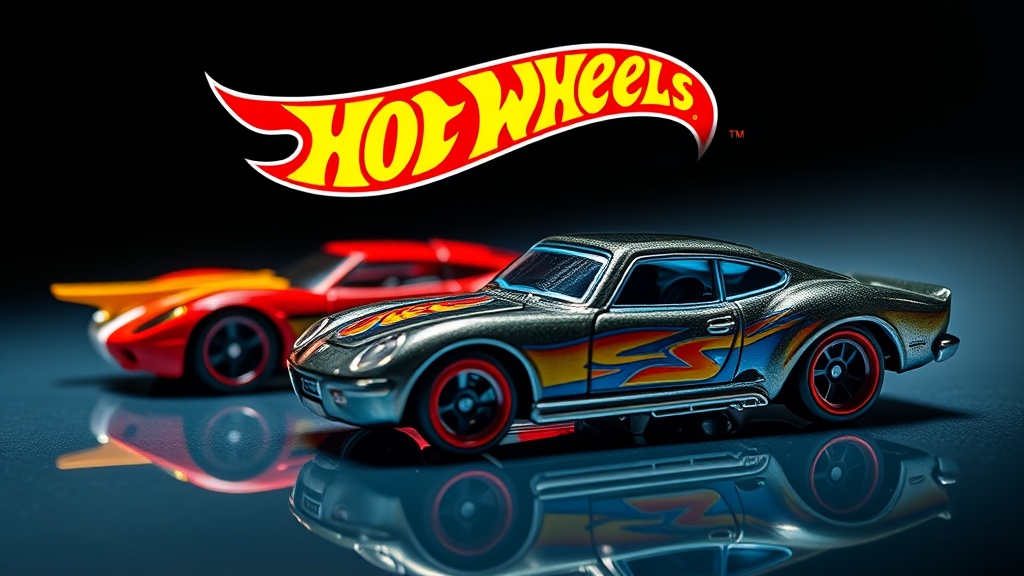
Tracing the Evolution of Hot Wheels Casting Designs

Have you ever wondered why a 1968 Original Sweetie Sweetie era casting looks so different from a modern Red Line or even a current basic mainline? This post breaks down the technical and stylistic shifts in Hot Wheels casting designs, from the heavy-metal era of the late sixties to the highly detailed digital sculpts of today. Understanding these changes helps collectors identify eras, recognize high-quality production, and even spot potential value in older models.
How did the original Hot Wheels designs differ from modern ones?
The original Hot Wheels designs focused on heavy, exaggerated proportions and "California Custom" aesthetics, whereas modern designs prioritize realistic scale and aerodynamic accuracy. In the early days, designers like Elliot Mazzoli and the team at Mattel prioritized the "look" of a custom hot rod—think big rear fenders and slightly oversized engines. These cars were meant to look fast even while sitting still on a shelf.
Modern castings, on the other hand, are often based on real-world licensed vehicles. When you pick up a 2024 casting of a Porsche 911, you're seeing a model that adheres strictly to the actual proportions of the car. The "fantasy" element hasn't disappeared, but it has moved from the base chassis to the specialized fantasy lines. It's a shift from "customized fiction" to "scaled reality."
The physical weight of the cars has also changed. Early models often felt substantial in the hand, sometimes featuring heavier metal bases or even solid metal components in certain premium lines. While modern basics are lighter to keep production costs down, the level of fine detail—like door handles, grill textures, and headlight recesses—is significantly higher than what you'd find in 1970.
"The beauty of a diecast car lies in the tension between the toy's playability and the model's accuracy."
What are the different eras of Hot Wheels casting styles?
Hot Wheels casting styles are generally categorized by their design philosophy and the era of production. Collectors often group these into specific-looking "generations" based on how the cars are sculpted and the level of detail provided.
Here is a breakdown of the major stylistic shifts:
- The Custom Era (1968–Early 1970s): This is the "Golden Age" of the original Sweet 16. The designs featured heavy curves, exaggerated engine bays, and a distinct "hot rod" vibe. These cars were often more about a certain "attitude" than being a perfect replica of a real vehicle.
- The Realism Pivot (Late 1970s–1980s): As the brand matured, there was a push toward more realistic car shapes. The designs became sleeker and less "cartoonish," moving away from the heavy custom-build aesthetic.
- The Licensing Boom (1990s–2000s): This era saw a massive influx of licensed real-world brands. The focus shifted toward accuracy for brands like Ford, Chevy, and Toyota. This is where the precision of the casting became a major selling point.
- The Digital/Modern Era (2010s–Present): Using advanced 3D modeling and CAD software, modern castings are incredibly precise. The curves are smoother, the panel gaps are more defined, and the "fantasy" cars now feature much more complex geometry than the simple shapes of the past.
If you're interested in the technical side of how these models are manufactured, checking out the Wikipedia page on die-casting provides a great foundation for understanding the metal-injection processes used by companies like Mattel. It's a fascinating look at how a liquid alloy becomes a collectible car.
It's worth noting that while the tech has improved, many collectors still crave the "chunkiness" of the older models. There is a certain nostalgia for the heavier, less refined feel of a vintage car that a modern, ultra-precise casting can't quite replicate.
Why does the level of detail matter for collectors?
The level of detail dictates both the aesthetic value and the potential resale value of a casting. A highly detailed model often appeals to adult collectors who want a miniature version of a real car, while a simpler casting might be more suited for younger players.
When evaluating your collection, keep an eye on these three specific detail areas:
- The Base Mold: Look at the underside. High-end castings often have more complex base shapes, whereas basic mainlines might have a very simple, flat underside.
- The Body Lines: Examine the "shut lines" or the edges of the doors and windows. In modern castings, these are often sharper and more defined.
- The Paint Application: While not strictly part of the metal casting, the way the paint sits in the crevices (the "tampo" printing) shows the quality of the design.
If you're trying to figure out if a piece is a high-value item, you should look at how the casting relates to its original release. A well-preserved vintage casting is a completely different beast than a modern-day "treasure hunt." You can learn more about distinguishing these by reading about top valuable Hot Wheels cars. The detail is often the first clue to its pedigree.
The difference between a "standard" casting and a "premium" casting is often visible in the weight and the wheel-well clearance. A premium model (like those in the Hot Wheels Boulevard line) will almost always have more intricate wheel designs and a more "grounded" stance than a basic mainline found in a grocery store peg.
Sometimes, I find myself looking at a modern car and thinking it looks a bit too "perfect." It lacks the soul of the slightly wonky, hand-sculpted feel of the 1960s. But then I'll see a modern Ferrari casting and realize that the precision is exactly what makes it beautiful. It’s a trade-off between character and accuracy.
How do collectors identify vintage vs. modern castings?
Collectors identify vintage versus modern castings by looking at the base, the wheel style, and the overall silhouette of the vehicle. This is the quickest way to tell if you're looking at a piece of history or a modern production.
Use this comparison table to help guide your eyes when you're hunting at flea markets or garage sales:
| Feature | Vintage (1968–1980s) | Modern (2010s–Present) |
|---|---|---|
| Proportions | Exaggerated, heavy, "custom" look | Realistic, scaled, aerodynamic |
| Wheel Style | Thick, often simpler spoke designs | Highly detailed, varied, realistic |
| Base Material | Often thicker, heavy metal/plastic mix | Lighter, more streamlined, often plastic |
| Detail Level | Broad shapes, less fine-line detail | Micro-details, sharp edges, CAD-driven |
The weight is also a giveaway. If you pick up a car and it feels surprisingly light or "hollow," it's likely a modern mainline. Older cars often have a certain heft that comes from the older manufacturing standards. However, don't rely solely on weight—some modern premium lines use heavier materials to mimic that old-school feel.
One thing to watch out for is the "Redline" era. If you see a car with a red stripe on the tire, you're looking at something that requires a different level of care. For more tips on maintaining the finish of your older cars, check out my guide on how to care for your Hot Wheels collection. The way you handle a vintage casting is fundamentally different from how you handle a modern one.
It's easy to get lost in the weeds of manufacturing years and casting numbers. But once you start seeing the patterns—the way the shapes evolved from the "wild west" of custom-looking cars to the precision of modern-day racing models—the hobby gets a lot more rewarding. You stop just seeing "a car" and start seeing the evolution of an industry.
Whether you're a fan of the heavy-metal-feeling classics or the razor-sharp modern replicas, there's a design language to every era. It's all about what the designer was trying to capture: the spirit of a custom shop or the precision of a factory floor.