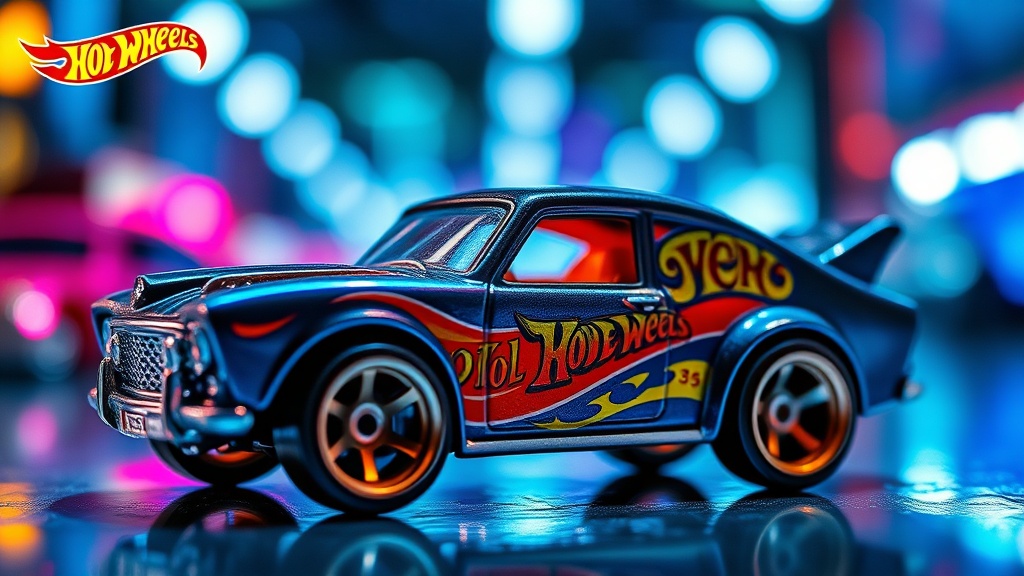
Hidden Gems in the Hot Wheels Treasure Hunt Hunt

The Subtle Flame Logo Identification
Decoding the Spectraflame Paint Finish
Recognizing Real Riders Rubber Tires
Checking Casting Variations for Regular Hunts
Did you know that fewer than 1 in every 10 Hot Wheels cars produced features the coveted Treasure Hunt logo? This post identifies the specific "hidden gem" models that collectors often overlook during a hunt, explains the subtle differences between regular and premium releases, and provides a roadmap for spotting high-value diecast in a crowded retail aisle.
The thrill of the hunt isn't just about finding the gold flame. It's about knowing which castings carry weight in the secondary market and which ones are just filler. We're looking at the specific models that often get skipped because they don't look "flashy" at first glance.
What is the Difference Between a Treasure Hunt and a Super Treasure Hunt?
The primary difference lies in the rarity of the production run and the specific physical markers like paint finish and wheel type. A standard Treasure Hunt (TH) features a small gold flame logo on the card-back and a specific color-shifting or matte paint. A Super Treasure Hunt (STH) is much rarer, featuring "Real Riders" rubber tires and a Spectraflame paint finish that shines much brighter than standard diecast.
It's a common mistake to think a shiny car is automatically a Super Treasure Hunt. Not true. Many regular cars have metallic paint, but they lack the deep, reflective luster of true Spectraflame. You'll often see collectors staring at a car for minutes, trying to determine if that slight sheen is just a regular casting or a true STH. (It's a frustrating game of squinting at store lighting, let's be honest.)
To understand the lineage of these designs, you might find it interesting to look at the evolution of Hot Wheels casting designs. The complexity of the molds has changed significantly over the decades, which affects how the paint sits on the metal.
Here is a quick breakdown of what to look for when you're standing in the aisle:
| Feature | Treasure Hunt (TH) | Super Treasure Hunt (STH) |
|---|---|---|
| Logo | Small Gold Flame | Small Gold Flame (often on card back) |
| Paint | Metallic or Matte | Spectraflame (High Gloss/Deep Color) |
| Wheels | Standard Plastic | Real Riders (Rubber/Authentic Tires) |
| Rarity | Occasional | Extremely Rare |
Which Hot Wheels Models Are Currently Most Desired?
The most desired models are currently those that feature iconic Japanese domestic market (JDM) cars or classic American muscle with specific limited-edition colorways. While the "Redline" era cars are the holy grail of vintage collecting, modern collectors are hunting for specific castings like the Nissan Skyline, Porsche 911, or certain Toyota models that frequently appear in Treasure Hunt-only iterations.
A lot of people focus on the "cool" cars, but the real money is often in the "sleeper" castings. These are the models that look unremarkable to a casual observer but have a massive following among specialized collectors. For example, a basic-looking van or a vintage truck might actually be a high-value target if it carries the right insignia.
If you want to see the heavy hitters, check out this list of the top 5 most valuable Hot Wheels cars. It'll give you a sense of the scale of the market.
That said, don't get blinded by the big names. Sometimes a "borer" car with a specific enthusiast's livery is actually a better investment than a flashy supercar. The community is obsessed with authenticity. If a car looks like a standard casting but has a unique, non-standard wheel, you've found something. It's a subtle distinction, but it's everything.
How Do You Spot a Treasure Hunt in a Retail Store?
To spot a Treasure Hunt, you must look for the small gold flame logo on the vehicle or the packaging and check for specific paint textures that differ from the standard mainline. Most hunters use a "scan and check" method: they look for the gold flame on the card-back first, then inspect the car for the specialized wheels or paint quality.
The process is repetitive. You're walking through the aisles of a Target or Walmart, looking at hundreds of cards. Most of them are junk—nothing bad, just standard, non-premium cars. The trick is to look past the bright, colorful packaging. The "pretty" cars are often the ones that aren't actually rare.
I've found that checking the back of the card is the fastest way. If you see that tiny gold flame, you stop immediately. Don't just keep walking. If you see it, pull the car out and look at the wheels. If the wheels are plastic and look standard, it's likely just a regular Treasure Hunt. If they look like actual rubber tires, you've hit the jackpot with a Super Treasure Hunt.
It's worth noting that many stores don't even stock the premium lines in the same aisle as the mainlines. You might find the standard cars in one section, while the higher-end, more expensive models are tucked away elsewhere. This can make the hunt even more difficult.
One tip I've learned over the years: check the bottom of the card. Sometimes the markings that indicate a special edition are tucked away in the fine print. It's a tedious process, but it's the only way to be sure. If you're worried about the physical condition of these finds, you should look into evaluating diecast value and condition. A dented card can significantly drop the resale value, even if the car inside is a gem.
The "Hidden Gem" Checklist
- Check the Card Back: Look for the gold flame logo. It's the first sign of life.
- Inspect the Paint: Is it flat, or does it have a deep, reflective "wet" look?
- Examine the Wheels: Are they the standard hard plastic, or do they look like rubber?
- Verify the Casting: Is this a common model or a specialized enthusiast model?
- Look for the "Real Riders": This is the ultimate tell for a Super Treasure Hunt.
Don't get discouraged when you find nothing but standard mainlines. The hunt is a numbers game. Most days, you'll find nothing but the same cars you saw last week. But the one day you find that specific colorway in a legendary casting? That's why we do this.
The market for these items is driven by scarcity. Unlike many other toys, the "value" isn't just in the toy itself, but in the rarity of the production run. This is why the community is so focused on the minute details. A single millimeter of difference in a wheel or a slight change in a paint shade can be the difference between a $2 car and a $100 car.
If you're just starting out, don't feel like you need to buy every single thing you see. Build a collection you actually enjoy. The "hunt" is a hobby, not a job. But if you do find a winner, make sure you know how to handle it. A single fingerprint can actually affect the value of a high-end collector's piece if you're not careful about how you store it.
It's a wild world out there in the aisles. Keep your eyes peeled for that gold flame. It's small, it's easy to miss, and it's often hiding right under your nose.